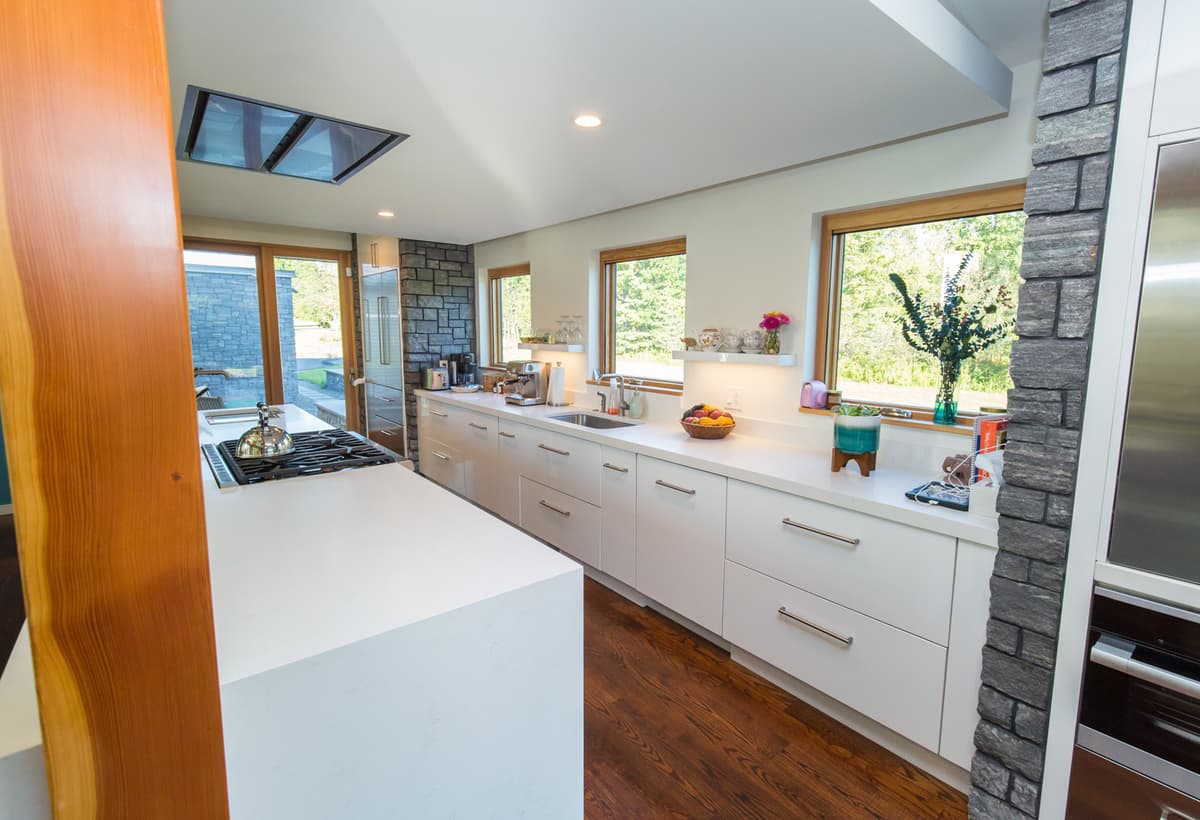

If you are planning a kitchen renovation in New York or New Jersey, the induction versus gas question is no longer a matter of taste — it is a design decision with real consequences for your health, your energy bills, and your home's future value.
The indoor air quality case
Gas ranges emit nitrogen dioxide, carbon monoxide, and fine particulates directly into the room where your family gathers most. Multiple peer-reviewed studies have linked gas cooking to elevated asthma rates in children. Induction cooktops emit none of these — they heat the pan directly through electromagnetic energy, which also means the cooktop surface itself stays cooler and safer to the touch.
Performance is no longer a compromise
Professional kitchens once insisted on flame. That era is ending. A modern induction cooktop boils water roughly twice as fast as gas, holds low temperatures with far more precision, and responds to adjustments instantly. Most clients who make the switch tell us the same thing: they would never go back.
What New York's codes mean for you
New York State's building electrification law phases gas hookups out of most new construction. If you are renovating now, installing a gas line is a bet against the direction of both the code and the grid. An induction-ready kitchen — with the 240-volt circuit it requires — is the future-proof choice, and it pairs naturally with heat pumps and other electrification upgrades we design into renovations.
Budgeting the switch
If your kitchen currently runs on gas, plan for an electrical panel assessment early in design. Some older homes need a service upgrade to support induction plus other modern loads, and it is far cheaper to do that work while the walls are already open. Utility rebates and the federal Inflation Reduction Act can offset a meaningful share of the cost — we help clients map every incentive they qualify for.
The bottom line
In nearly every kitchen we design today, induction wins on safety, speed, air quality, and long-term value. If you are weighing the decision for your own renovation, bring it up in your first consultation — it affects the electrical design, the ventilation strategy, and even the cabinetry layout, so it is a day-one conversation, not a finish-selection afterthought.
Planning a project of your own?
Every LEAP engagement starts with a free, no-obligation consultation. Bring your questions — we'll bring honest answers.
Book a free consultation